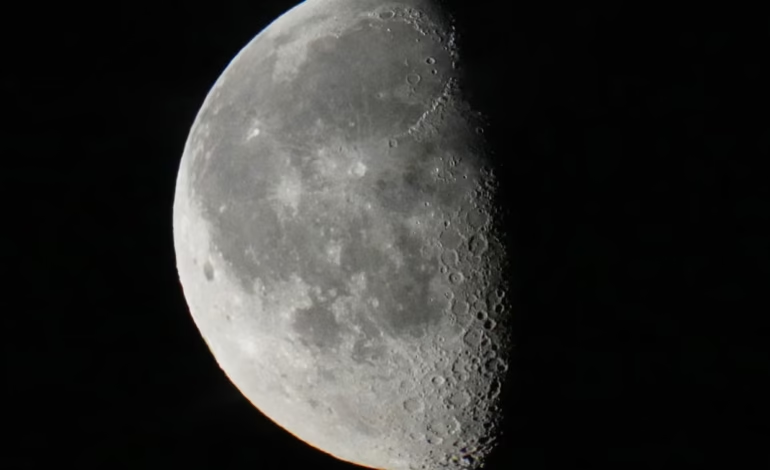

August 6: A dead upper stage of a SpaceX Falcon 9 rocket is thought to have crashed into the Moon in an unplanned collision, creating a new crater on the lunar surface and bringing new attention to the growing challenge of managing space debris beyond Earth’s orbit. Scientists say the impact was not dangerous to Earth but provided a rare opportunity to observe how artificial objects interact with the surface of the Moon.
The four-tonne upper stage of the Falcon 9 rocket had been drifting through space for more than a year before it hit the Moon at an estimated speed of around 5,400 mph (8,700 km/h). The rocket stage launched in January 2025 with Firefly Aerospace’s Blue Ghost lunar lander and ispace’s lunar mission, before being left on an uncontrolled trajectory after its primary mission was completed.
The scientists had been tracking the orbit of the rocket body and had predicted the impact weeks ago. Astronomers using the European Southern Observatory’s Very Large Telescope in Chile spotted a plume of sodium and lithium shortly after the predicted impact time, but no spacecraft directly observed the impact event itself, so this provided strong evidence that the rocket did hit the lunar surface as expected.
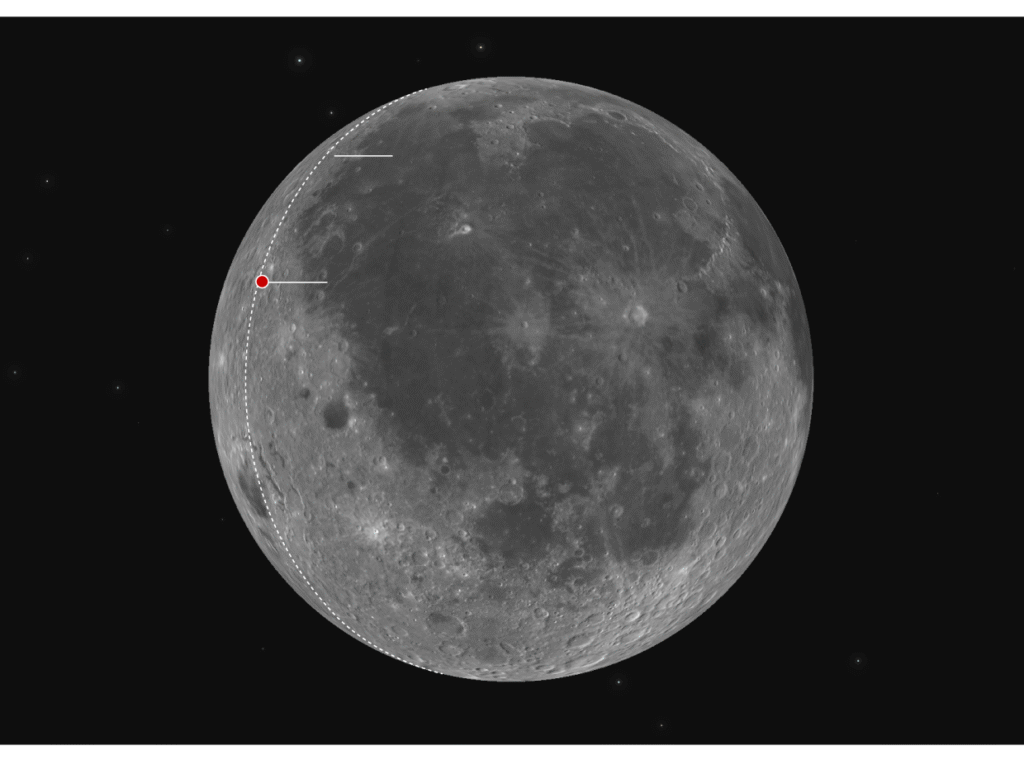
Where Did the SpaceX Rocket Hit?
The impact site was located near Einstein Crater, close to the visible western limb of the Moon. Researchers said the collision likely created a crater roughly 60 feet (18 meters) across and lofted dust and rock high above the lunar surface. The impact was on a sunlit part of the Moon, making the collision difficult to see directly from the Earth.
Future flybys of NASA’s Lunar Reconnaissance Orbiter (LRO) and South Korea’s Danuri lunar orbiter are expected to capture images of the impact site. Scientists hope the data will help them understand artificial impact events, lunar surface composition and ejecta behaviour.
The incident also underscores a growing concern about space debris, experts said. Many rocket stages finish their jobs by coming back into Earth’s atmosphere and burning up. But deep-space launches can leave hardware in long-term, uncontrolled orbits. As government and commercial lunar exploration ramps up, astronomers have warned that it will be increasingly important to track and safely dispose of such objects.
Scientists say man-made impacts on the Moon are still rare compared with natural meteorite impacts. But the number of artificial objects passing through cislunar space is expected to grow dramatically in the next decade with NASA’s Artemis programme, commercial lunar landers and international missions driving exploration beyond Earth orbit.
“The latest collision will not pose any threat to anyone on Earth or other future lunar missions,” the scientists emphasized. Instead, it provides an opportunity to study impact dynamics and improve future tracking systems for spacecraft traveling between Earth and the Moon. Better monitoring may help prevent uncontrolled collisions as more missions head to lunar environment
The event was accidental, but it does remind us that space-exploration is more and more about dealing with not only new missions, but the ever-increasing amounts of hardware left behind. Scientists say lessons learned from this impact could influence future international standards for the disposal of spacecraft after their missions have ended.
Image Credits: Theguardian