
In the Himalayan region, when a glacier-related collapse triggered flash floods in Nuwakot, a swift decision by a Nepal school principal to evacuate his students saved 1,643 children. The wider disaster has killed hundreds in Nepal and Tibet, with rescue teams still searching for people missing in flooded valleys and tunnels of hydropower projects.
Flood warning prompts principal to order evacuation
Rajendra Dawadi,principal of Tribhuvan Trishuli Secondary School and an English teacher there in Trishuli Valley, got a warning at about 9:20 a.m. Wednesday that a nearby village had been washed away by the river.
Dawadi thought the three-storey school building was safe. It was roughly 60 meters above the river. Soon a parent arrived with a warning that the water level was rising fast. He immediately rang the school bell and ordered the teachers to evacuate the classrooms. He also reached out to school bus drivers, telling them to turn back. The children were moved to higher ground as the floodwaters approached. One pupil had a panic attack and was taken up the hill on a motorbike, the other children walked. At length the party stopped in the shade of a bodhi-tree.
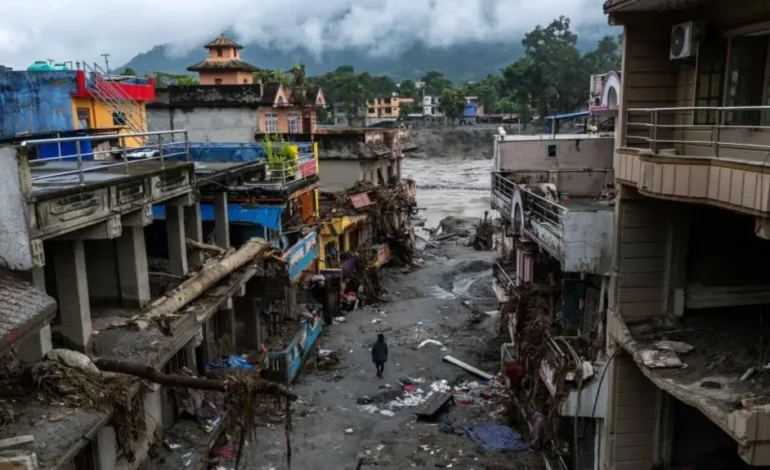
Then the flood waters roared through with mud, rocks, ice and debris. Buildings, bridges and other infrastructure was destroyed, including the school itself.
All 1,643 children lived. But two of the school staff members died in the areas near the river and school when they returned at the time of the disaster.
Catastrophic Flood from Glacier Collapse
The flash flood was caused by the collapse of a large mass of ice and rock from the top of Langtang Lirung near the Nepal-Tibet border. The material fell into the upper Lhende Khola river system and caused a destructive flow of water and debris downstream.
The disaster occurred on Aug. 26, impacting communities in Nepal and sections of Tibet. Rasuwa, Nuwakot and Dhading were among the districts where roads, bridges, buildings and energy infrastructure were extensively damaged.
Hundreds dead, thousands unaccounted for
As authorities examined casualty and missing-persons reports, the scale of the disaster kept shifting. Nepal’s disaster authority reported 752 deaths by Sunday, with later updates by the Times of India citing 768 deaths and a further increase reported by Nepal Police.
Chinese authorities said 16 people were killed in Tibet and 546 people were missing, including 49 Indians. “The flooding also affected the border area of Gyirong, where people were traveling between Nepal and Tibet.
The ongoing search has been hampered by destroyed infrastructure, difficult mountain terrain and unstable conditions.
Rescue Teams Search for Hydropower Workers
Some of the most difficult rescue operations are taking place at hydropower projects where workers are believed to be trapped inside tunnels blocked by mud and debris.
The Times of India reported that 537 workers and employees remained unaccounted for at nine hydropower projects in Rasuwa and Nuwakot. Rescue teams have faced blocked tunnel entrances, damaged infrastructure and difficult access to the affected sites.
Nepal has sought specialist assistance from other countries. India has sent rescue specialists and medical personnel, while China has also deployed a tunnel-rescue team.
Rescue Teams Search for Hydropower Workers
Some of the most difficult rescue operations are taking place at hydropower projects where workers are believed to be trapped inside tunnels blocked by mud and debris.
The Times of India reported that 537 workers and employees remained unaccounted for at nine hydropower projects in Rasuwa and Nuwakot. Rescue teams have faced blocked tunnel entrances, damaged infrastructure and difficult access to the affected sites.
Nepal has sought specialist assistance from other countries. India has sent rescue specialists and medical personnel, while China has also deployed a tunnel-rescue team.
India Steps Up Relief and Rescue Assistance
India has been coordinating with Nepalese authorities over rescue operations and assistance to Indian nationals affected by the floods.
The Indian government has sent relief supplies and specialist teams to Nepal. An 11-member Indian rescue team was deployed to assist with tunnel operations, while forensic teams were also sent to help identify victims.
Indian authorities have also been working to locate citizens reported missing or stranded in the disaster-hit areas.
A Warning That Made the Difference
While rescue operations continue across the Himalayan region, the evacuation at Tribhuvan Trishuli Secondary School stands out as an example of how timely action can make a critical difference during a rapidly developing disaster.
Dawadi acted after receiving an early warning and moved the children to higher ground before the flood reached the school. The building was later destroyed, but the 1,643 students survived.
The wider disaster, however, remains a major humanitarian emergency, with rescue teams still searching for missing people and authorities preparing for the possibility of further flooding.
For more: News