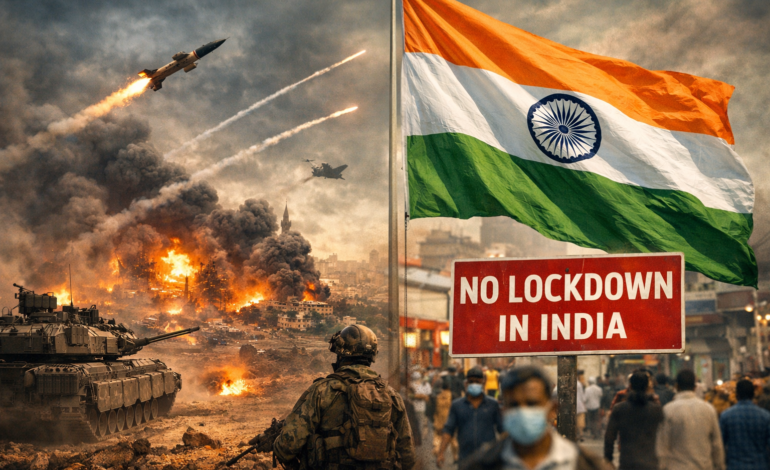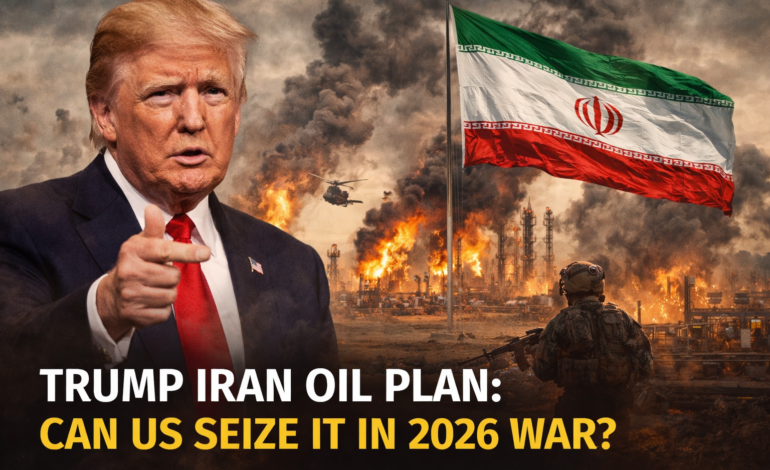

As the Middle East conflict intensifies, former US President Donald Trump has sparked fresh controversy by suggesting that the United States could “take the oil” from Iran — a move that could significantly reshape the geopolitical and economic landscape.
The statement comes as the war involving the US, Israel, and Iran continues to escalate, with rising tensions across key regions and growing uncertainty in global markets.
What Trump Said and Why It Matters
In recent remarks, Trump indicated that seizing Iran’s oil resources could be a strategic option, even hinting at capturing Kharg Island, a critical export hub through which most of Iran’s oil is shipped.
He compared the idea to US actions in Venezuela, where Washington sought control over oil infrastructure, suggesting a similar approach could be applied in Iran.
However, such a move would not be simple. Analysts warn that attempting to take control of Iran’s oil facilities could lead to a prolonged military presence and increase the risk of casualties and further escalation.
Why Iran’s Oil Is So Important
Iran plays a crucial role in the global energy market, particularly through its control over key oil routes and infrastructure. The ongoing war has already disrupted supply chains and raised concerns about global energy security.
The Strait of Hormuz, located near Iran, is one of the most important oil transit routes in the world. Around 20% of global oil supply passes through this region, making any disruption highly impactful.
With tensions rising, oil prices have surged sharply, reflecting fears of a prolonged crisis and reduced supply.
Global Impact: Markets and Energy Crisis
The conflict has already triggered major economic reactions:
- Oil prices have crossed $110 per barrel amid supply concerns
- Energy markets are facing what experts describe as a “worst-case scenario” due to disruptions in supply chains
- Asian and European markets have shown volatility as investors react to uncertainty
If the situation worsens, analysts warn it could lead to inflation, increased fuel prices, and broader economic instability worldwide.
Risks of a Military Move
While Trump’s proposal may appear strategic from a resource perspective, it carries significant risks:
- Military escalation: Seizing oil infrastructure could trigger direct confrontation with Iran
- Long-term occupation: Controlling oil assets would require sustained military presence
- Global backlash: Such a move could be seen as a violation of international law
- Economic consequences: Further disruptions could worsen the global energy crisis
Experts caution that any attempt to control Iran’s oil could deepen the conflict rather than resolve it.
Bigger Picture: War Goals and Strategy
The idea of securing Iran’s oil is not entirely new. Some analysts believe resource control has been one of the underlying factors in the ongoing conflict, alongside security and nuclear concerns.
The broader war has already caused:
- Massive disruption in global oil and gas supply
- Increased geopolitical tensions
- Rising costs for governments and consumers
Critics argue that expanding the war to include resource seizure could further complicate diplomatic efforts and delay any possibility of peace.
Conclusion
Trump’s remarks about taking Iran’s oil highlight how the Middle East conflict is evolving beyond military confrontation into economic and strategic territory.
While the idea may aim to secure energy resources, it raises serious questions about legality, feasibility, and global consequences. As the war continues, the world is watching closely — not just for military developments, but for decisions that could reshape global energy and political stability.
For more updates.
Image credit: AI-generated (ViewNewz)