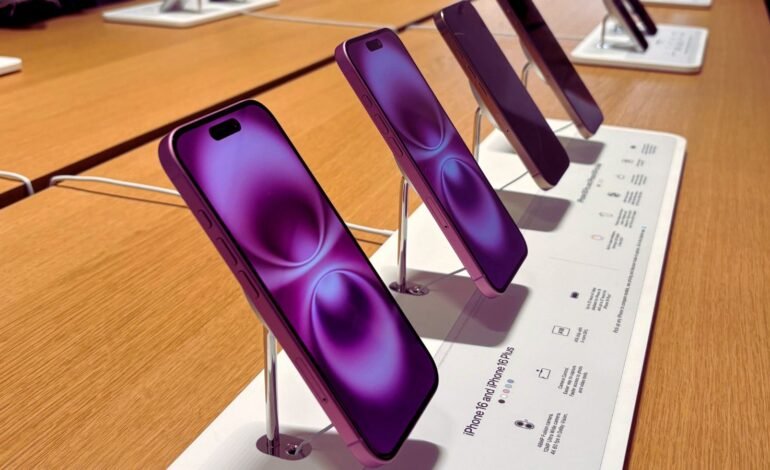

As Apple completes 50 years, the company stands at a defining moment — balancing a powerful legacy with growing pressure to reinvent itself for the future.
From a small garage startup in 1976 to one of the world’s most valuable tech giants, Apple has reshaped how people interact with technology. Yet, as it enters its next phase, a key question emerges: Can Apple create another breakthrough like the iPhone?
The iPhone: Apple’s Biggest Game-Changer
Among all its innovations, the iPhone remains Apple’s most influential product. It didn’t just redefine smartphones — it transformed entire industries, from mobile apps to digital services.
The iPhone introduced a design-first approach, combining hardware, software, and user experience in a way that had never been seen before. This shift helped Apple create products that were not just functional but emotionally appealing to users.
Over time, the iPhone became the backbone of Apple’s ecosystem, powering devices like the Apple Watch, AirPods, and services such as the App Store and iCloud.
A Legacy Built on Innovation
Apple’s journey is marked by a series of groundbreaking products:
- Macintosh (1984): Made computers accessible to everyday users
- iPod (2001): Revolutionized digital music consumption
- iPhone (2007): Redefined communication and computing
- iPad & Wearables: Expanded Apple’s ecosystem
These products didn’t just succeed commercially — they changed how technology fits into daily life.
At the core of this success has been Apple’s philosophy of combining technology with design and simplicity, a vision strongly shaped by co-founder Steve Jobs.
The Challenge Ahead: Beyond the iPhone
Despite its continued success, the iPhone may have reached a point of maturity. While Apple continues to release new versions, major design shifts have become less frequent compared to its earlier years.
This has led to increasing pressure on Apple to find its next big innovation — something as transformative as the iPhone once was.
The company has already explored new areas:
- Wearables like Apple Watch
- Spatial computing with Vision Pro
- Services including Apple Music and Apple Pay
However, none of these have yet matched the cultural and technological impact of the iPhone.
The AI Era: A New Opportunity or a Risk?
As the tech industry rapidly moves toward artificial intelligence, Apple faces stiff competition from companies investing heavily in AI-driven products and platforms.
To stay ahead, Apple must integrate AI into its ecosystem in a way that aligns with its core strengths — privacy, design, and user experience.
Experts believe the next phase of innovation could come from:
- AI-powered personal devices
- Smart wearables and glasses
- Health and wellness technology
- Seamless ecosystem integration
The challenge is not just to innovate, but to do so in a way that feels uniquely “Apple.”
Looking Ahead: Reinvention or Evolution?
Apple’s 50-year journey proves its ability to adapt and redefine markets. But the coming years will test whether it can once again lead a technological revolution.
The company now stands at a crossroads:
- Continue refining the iPhone ecosystem
- Or take a bold leap into a completely new category
Whatever path it chooses, expectations are high — not just from investors, but from millions of users who associate Apple with breakthrough innovation.
Conclusion
Apple’s story is one of vision, design, and transformation. From the Macintosh to the iPhone, it has consistently changed the way people experience technology.
But as it enters its next chapter, the question is no longer about its past success — it’s about its ability to shape the future.
The world is now waiting for Apple’s next “iPhone moment.”
For more updates.
Image credit: The Indian Express